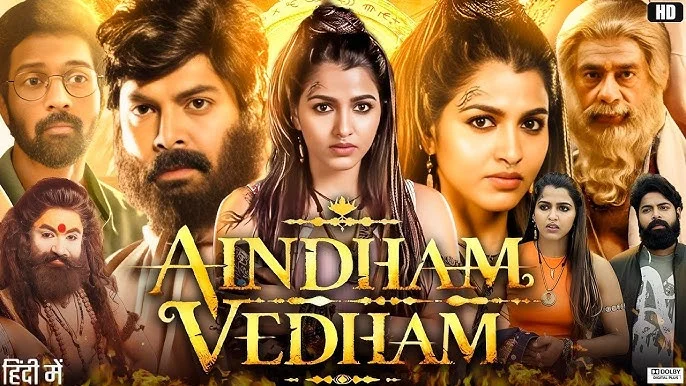
What happens when the ancient wisdom of the Vedas meets the cold, hard logic of modern science? This is the central question that drives the narrative of Aindham Vedham. In an era where cinema often chooses between mindless action or grounded realism, this film dares to bridge the gap between faith and fact.
For movie enthusiasts and spiritual seekers alike, Aindham Vedham offers a refreshing journey. At Webparsab, we believe that understanding the layers of such a film can enhance your viewing experience, making it more than just a two-hour distraction.
The Core Concept: What is the “Fifth Veda”?
The title itself, “Aindham Vedham,” translates to the “Fifth Veda.” Traditionally, Indian philosophy recognizes four Vedas: Rig, Sama, Yajur, and Atharva. The concept of a fifth Veda is often used to describe a text or a medium that brings these complex teachings to the common man.
In this movie, the “Fifth Veda” is explored through a lens of suspense and discovery. It suggests that there is a missing link in human knowledge—a bridge that connects our technological advancements back to our spiritual roots. Webparsab explores how this theme resonates with a modern audience looking for deeper meaning in entertainment.
A Cinematic Blend: Spirituality Meets Science
The most striking feature of the Aindham Vedham movie is how it handles the conflict between a scientist’s skepticism and a devotee’s faith.
The Scientific Perspective
The film utilizes high-concept theories, possibly touching upon quantum physics or ancient mathematics. It portrays science not as an enemy of religion, but as a tool to decode the mysteries left behind by our ancestors.
The Spiritual Journey
On the other hand, the spiritual aspect is handled with grace. It doesn’t rely on blind superstition. Instead, it invites the protagonist—and the audience—to look at rituals and myths as symbolic representations of universal truths.
How to Deeply Analyze Movies Like Aindham Vedham
If you are a beginner interested in “Deep Cinema,” following a structured approach can help you appreciate the nuances. Here is a step-by-step guide curated by Webparsab:
Step 1: Research the Background
Before watching, spend 5 minutes reading about the historical or mythological references mentioned in the title. Knowing what the “Vedas” are will give you an immediate advantage.
Step 2: Pay Attention to Symbolism
Notice the recurring colors, objects, or numbers in the film. Often, director-driven films like Aindham Vedham use visual cues to represent scientific or spiritual concepts.
Step 3: Listen to the Dialogue
In movies exploring science and religion, the dialogues are often packed with philosophical debates. Don’t just watch the action; listen to the arguments being made.
Step 4: Post-Movie Discussion
After the credits roll, visit sites like Webparsab or community forums to see how others interpreted the ending. Comparative analysis is the best way to learn.
Benefits of Watching High-Concept Cinema
Why should you choose a movie like Aindham Vedham over a standard blockbuster?
- Intellectual Stimulation: It challenges your brain to think about the universe and your place in it.
- Cultural Connection: It provides a gateway to understanding ancient Indian heritage in a modern context.
- Emotional Depth: Beyond the science, these movies often deal with human struggles, making the spiritual payoff feel earned.
- Unique Storytelling: You get to experience a narrative structure that breaks the typical “hero vs. villain” trope.
Common Challenges in Understanding Such Films & Solutions
Many viewers feel “lost” when watching movies that involve heavy scientific or philosophical jargon. Here are some solutions:
| Problem | Solution |
| Complex Jargon: Terms like ‘Quantum’ or ‘Vedic Chants’ might be confusing. | Use Webparsab guides to look up key terms used in the movie’s plot. |
| Slow Pacing: Intellectual movies often take time to build the story. | Approach the film as a ‘journey’ rather than a race to the climax. |
| Ambiguous Endings: The movie might not give a clear answer. | Understand that the goal of the film is to make you ask questions, not just provide answers. |
| Subtitles Issues: Language barriers can make it hard to catch nuances. | Always look for high-quality, official subtitles to ensure the philosophy isn’t lost in translation. |
Frequently Asked Questions (FAQ)
1. Is Aindham Vedham based on a true story?
While the movie draws heavily from historical texts and real scientific theories, the specific narrative and characters are a work of fiction designed for cinematic exploration.
2. Can I watch this movie with my family?
Yes, usually movies in this genre are clean and focus on intellectual themes, making them suitable for a wide audience. However, check the age rating on your streaming platform first.
3. Does the movie favor religion over science?
Most viewers find that the film maintains a neutral ground, suggesting that both science and spirituality are different paths leading to the same truth.
4. Where can I find more analysis on similar movies?
You can find detailed breakdowns and reviews of such high-concept films right here on Webparsab.
5. Is the “Fifth Veda” a real thing?
In various traditions, texts like the Mahabharata or certain arts like Natya Shastra are referred to as the “Fifth Veda,” but the movie uses the term as a metaphor for hidden universal knowledge.
Conclusion
The Aindham Vedham movie is more than just a piece of entertainment; it is a bridge between two worlds that are often seen as opposites. By merging the precision of science with the depth of spirituality, it provides a unique cinematic experience that lingers in the mind long after the screen goes dark.
Whether you are a fan of sci-fi or a student of philosophy, this film has something to offer. Stay tuned to Webparsab for more insights into the world of cinema, technology, and beyond.